Welcome to Misty Reef — a free social casino platform built for players in Aotearoa New Zealand. Spin the reels, hit 21, or try your luck on the wheel of fortune. No real money, no risk — just pure entertainment with virtual coins.
Our collection features classic slots, blackjack with dealer AI, a fortune wheel, and more — all playable right in your browser. Every game is designed for fun, fairness, and a smooth experience on any device.
All games are free to play. Virtual coins only — no real money prizes. Players must be 18+. Play responsibly.


Our Games
Free-to-play favourites — no download needed.
Misty Reef brings together a curated collection of browser-based games that capture the excitement of a real gaming floor — without the risk. Every game runs on virtual coins that refill automatically, so the fun never has to stop.
Whether you prefer the classic thrill of spinning reels, the strategy of blackjack, or the anticipation of the fortune wheel — there's something here for every Kiwi player.
All games are built for fair play and transparency. Results are random, the house has no edge, and your virtual balance is yours to enjoy. We believe entertainment should be fun, free, and responsible.
18+ only. For entertainment purposes only. No real money gambling. Virtual coins have no monetary value.
Choose a game below to start playing with 500 free coins!
Featured Games
Reef SlotsClassic 5×3 reel action
Dive into the deep with Reef Slots — a classic 5-reel, 3-row slot machine featuring ocean-themed symbols, smooth vertical strip animations, and staggered reel stops. Match symbols across paylines to multiply your virtual coins. Free spins, wilds, and scatter bonuses keep every session fresh.
Blackjack CoveBeat the dealer to 21
Test your wits against a sharp dealer AI in Blackjack Cove. Hit, stand, or double down — every hand is dealt from a properly shuffled deck. Watch your coin stack rise as you make smart calls and chase that perfect 21. Classic rules, clean interface, pure strategy.
Fortune WheelSpin to win big virtual prizes
Give the Fortune Wheel a spin and see where fate takes you! Twelve colourful segments, each with a different virtual coin multiplier. Watch the wheel slow down and land on your prize. Simple, satisfying, and endlessly replayable — the perfect quick game between sessions.
Need Help?
Get in touch at [email protected] for any questions about our platform or games.
Frequently Asked Questions
-
Is Misty Reef free to play?
Yes! Misty Reef is 100% free. All games use virtual coins that have no real-world monetary value. No purchases are required. -
Can I win real money?
No. Misty Reef is a social casino for entertainment only. Virtual coins cannot be exchanged for real money, prizes, or goods of any kind. -
What games are available?
We currently offer Reef Slots (a cascade-reel slot machine), Blackjack Cove (classic 21 with dealer AI), Tidal Spin (a double-or-nothing wheel), Depth Dive (a risk-reward deep sea adventure), and Pearl Hunt (a memory matching game). -
What happens if I run out of coins?
Your virtual coin balance automatically refills to 500 coins when it drops below 10. You will never be locked out of playing. -
Is there an age requirement?
Yes. Misty Reef is available to players aged 18 and over only. An age verification gate is presented when you first visit the site. -
How is my data handled?
We take your privacy seriously. Game progress is stored locally in your browser. We do not collect personal information beyond what is described in our Privacy Policy, which complies with the NZ Privacy Act 2020. -
Where can I get help with problem gambling?
If you or someone you know needs support, please contact the Gambling Helpline at 0800 654 655, the Problem Gambling Foundation at 0800 664 262, or visit Choice Not Chance. For general wellbeing support, call or text 1737.
Project Results
Prototypes, research, guides and presentations from projects that have run in the Knight Lab Studio.
Product > Journalism AI Readiness Scorecard
AI, Automation, and Newsrooms: Finding Fitting Tools for Your Organization
If you’d like to use technology to make your newsroom more efficient, you’ve come to the right place. Tools exist that can help you find...
Mixed Reality > Augmented Reality Features with 3D Food Photography
Building AR Journalism Experiences to Educate and Inform
In Spring of 2020, one of the Knight Lab Studio teams focused on exploring how Augmented Reality can be used to create experiences and tools...
Product > Storytelling with GIFs
Exploring and Understanding the Storytelling Potential of GIFs How GIFs are used across different platforms
From memes to animated data visualizations, GIFs have become a staple in the way we communicate digitally to express ideas, feelings, and concepts. GIFs are...
Mixed Reality > Information Spaces in AR/VR
Designing Information Spaces for Augmented Reality
In the winter quarter of 2019, our team explored how Augmented Reality can benefit different types of journalism. Over the course of the class, we built...
Mixed Reality > Resurrecting History for VR
Transforming Stereographs into Point Clouds
Virtual and augmented reality, though often used for gaming purposes, may be turned to a more academic or journalistic purpose. Throughout the fall, we explored...
The Hammer Without A Nail Oscillations is a New Art Form Making Meaningful Impact
Imagine a classroom of elementary-aged students. They appear to be sitting cross-legged on the floor or walking around the room, but in reality, they’re dancing....
Context Without Clutter
Unlike literature, articles are scarcely allowed to fully flesh out the worlds that they exist in. Brevity and intentionality are often required to keep audiences...
Prototyping Spatial Audio for Movement Art
One of Oscillations’ technical goals for this quarter’s Knight Lab Studio class was an exploration of spatial audio. Spatial audio is sound that exists in...
Comparing Motion Capture Techniques for Movement Art
With Oscillations’ connection to the movement arts, it made sense to experiment with existing motion capture technology to find accurate, consistent, and scalable ways to...
Oscillations Audience Engagement Research Findings
During the Winter 2018 quarter, the Oscillations Knight Lab team was tasked in exploring the question: what constitutes an engaging live movement arts performance for...
Product > Automated Fact Checking
How to translate live-spoken human words into computer "truth"
Our Knight Lab team spent three months in Winter 2018 exploring how to combine various technologies to capture, interpret, and fact check live broadcasts from...
Projects
Projects that have run in the Knight Lab Studio.
Upcoming Projects
Knight Lab Studio projects running in Fall 2026.
Look againDetecting cheapfake images on social media
While "deepfakes" — AI-generated synthetic media — get most of the attention, an arguably more dangerous threat pervades social media: cheapfakes. These are images that haven't been generated by AI at all, but instead manipulated through low-tech means: cropping out context, reposting old photos as if they were new, relabeling images from one place or event to misrepresent another. Because cheapfakes don't require sophisticated tools, they are produced constantly, they're difficult to detect automatically, and they travel fast. The same photo of a crowd can become "evidence" for a dozen different claims depending on how it's framed. Is there a way to help social media users recognize when they're looking at one?
News in translationExploring the needs of Chicago's minority language speakers
Although Chicago has several non-dominant language news sources, including Spanish and Polish newspapers, linguistic barriers still present difficulty for immigrant communities to access news. Previous work focuses on wholesale translation of news into languages other than English, but anecdotal data suggests that immigrant communities often circulate English-language news captioned or summarized in foreign languages attached to English sources. The purpose of this project is to systematically assess news consumption habits in smaller minority linguistic communities that are not served by existing news sources. We will then build a prototype system that summarizes news in one or a few languages in modalities (such as WhatsApp) that match the existing news consumption habits of the communities we intend to serve and conduct user research with the tool.
Solutions for Solutions JournalismRapid Response for What Works
In public health, climate, housing, or education, when a crisis hits, journalists are expected to move fast. But while coverage often captures what’s going wrong, it’s much harder to quickly identify and report credible responses that are actually working. Solutions journalism aims to fill that gap, yet most newsrooms lack the systems, workflows, and tools to do it under pressure. The result: missed opportunities to inform the public with reporting that is not just urgent, but useful. Is there a way to build tools and protocols that help journalists surface verified solutions in real time?
Design Research
Inspiration and Ideation
Auditing the NewsEvaluating News Quality on Smart Speakers
Alexa, Siri, Google Home, Cortana—smart speakers and agents are now used by about 20% of US homes. People use them to ask about weather, set timers, play games, get information, or listen to the news. But are these devices delivering high-quality news and information or could they be misinforming and sharing “junk” news? This project aims to find out. By developing an audit method that defines what queries to audit and systematically collects data on the results over time for those queries from several different smart speakers, the project will allow for an assessment and comparison of news quality from these different devices.
Civic Engagement with City Bureau
As local news organizations shrink, many civic advocates fear that no one will be monitoring the day-to-day processes that make city governments run. As part of their innovative approach to closing news gaps and promoting civic engagement, Chicago’s City Bureau has developed their “Documenters” program to train citizens to observe and record public meetings. As they develop this team of citizen journalists, they are now considering the complementary question: what is the most effective way to make the work they produce available and useful to Chicagoans?
For this project, the Northwestern student team will conduct design research and prototyping to explore solutions. Students will be expected to be in close contact with City Bureau’s team, with current documenters, and with engaged citizens who want to stay informed about what’s happening at the heart of these civic processes. Students should be prepared to go out into Chicago to meet with these people face to face for interviews, observations, and prototype testing.
ProPublica Illinois
Students will design, develop, prototype and test one tool for community engagement, with a likely focus on the listening and information gathering stage.
Mixed Reality
Virtual, Augmented... It's all Reality
Augmented Reality Visualizations
An experimental design project that explores visualizing data in three dimensions for augmented reality. Visualizations that can be examined and inspected by physically getting closer or understood by walking around them, open up exciting possibilities for how we communicate complex ideas and data that reveals hidden truths.
Exploring Data Visualization in VR
An experimental design project, in which we students are analyzing methods for communicating data visually and exploring how those principles might be transferred and transformed in a 360 environment.
Photojournalism in 3D for VR and Beyond
In this project, students will use modern approaches to making 3D images both with hardware and software processing.
Product
Our most solution-oriented projects.
Creative Co-Author
Creative Co-author is a creative writing enhancement tool that focuses primarily on pounding out the first draft. It is type-ahead cranked up to eleven. It types ahead, lurks behind, and generally peers over your shoulder while you pound out words in a speed-draft writing reverie.
Storytelling with GIFsFacilitate simple visual social sharing.
This project will build upon prototypes and research conducted in the Fall 2019 Studio class, but participation is open to any interested student. As the open-web continues to die, storytellers need tools that help them create sharable artifacts suitable for a variety of social networks and platforms. Brevity and portability are of the utmost importance. This project is concerned with designing a tool that allows novice storytellers to create simple 5 frame (5 images) GIFS that when combined with text for the post, are sharable on a variety of platforms and social networks. This iteration of the project will be focused on UX and UI design and building a sustainable application for the creation of visual stories saved in the GIF file format.
Storyline: Charts that tell stories.
One of the most common problems we see in data storytelling is how and when to introduce an editorial layer onto a visualization. Mobile devices afford us very little real estate to work with, and interactivity must be limited. But without a “story” layer, users are left without the context to understand what events might impact or inform a trend. They see something going up or down but don’t see why. “Storyline” will be a tool for creating stories around line graphs.
Sensors
Using sensors to collect information about our environment.
Environmental Reporting with Sensors
Sensor journalism uses sensors to collect information about our environment. It opens new possibilities for journalists enabling them to collect and process data that might not be available or at a level of detail not previously available.
Privacy Mirror
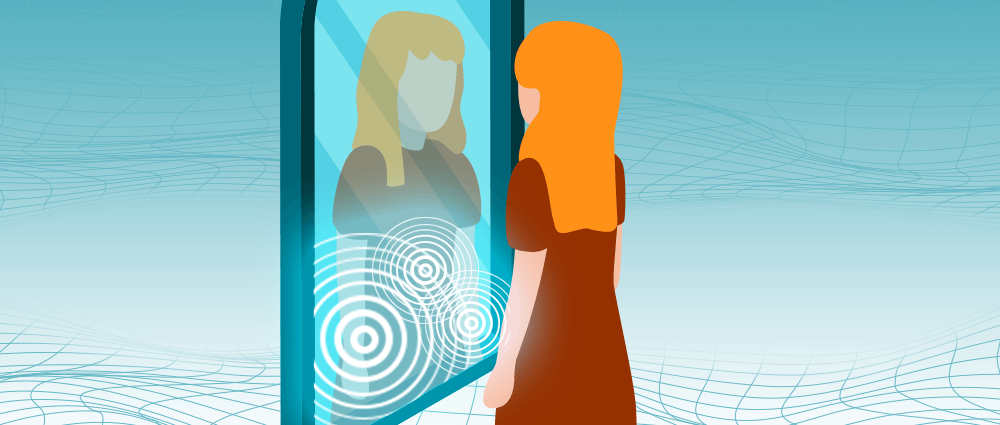
The average person today that has a smartphone, walks around leaking information about themselves over radio signals. WiFi, bluetooth and NFC radiate personal information into the public airwaves. These signals can tell you a lot about a person without their knowledge. To raise awareness around privacy and security for digital devices, this project will seek to create a “mirror” that reflects back information that is radiating out from anyone who stands in front of it. Frequencies include: RFID cell phones, WiFi, bluetooth, Misc RF at 900Mhz 2.4Ghz 5Ghz
SensorGrid API and Dashboard
SensorGrid is Knight Lab's experimental prototype environmental sensor wireless network system. This project will focus on the design and development of the web API and user dashboard for SensorGrid data management and presentation.